
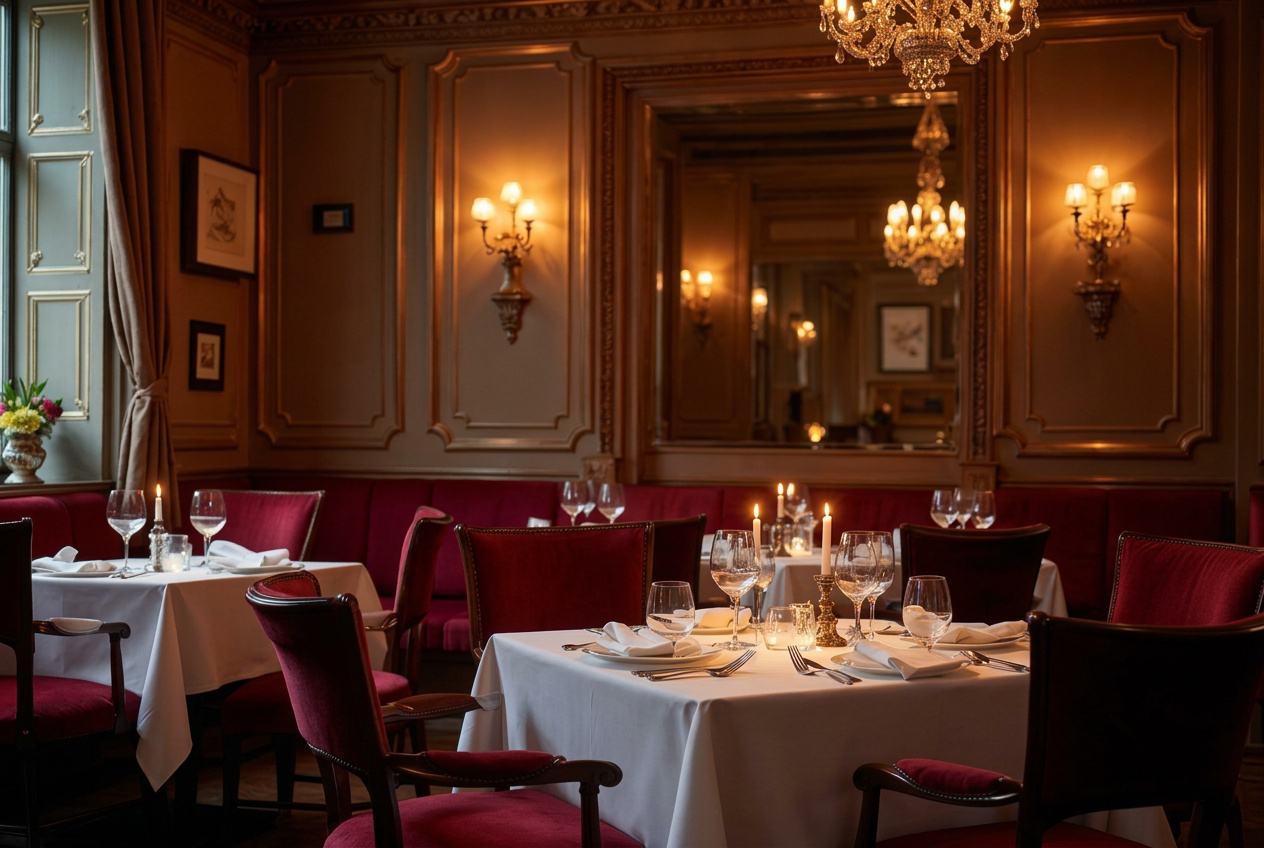
These are not easy days to run a restaurant, pub or hotel in Britain. According to NIQ's Hospitality Market Monitor, powered by CGA intelligence, the number of licensed premises fell by 305 in the first quarter of 2026 alone, to 98,609, an average of 3.4 net closures every day, with casual dining hit hardest.
In January, UKHospitality warned that without action on business rates the sector could lose 963 restaurants, 574 hotels and 540 pubs over the year, the equivalent of six venues a day. Rising labour, energy and food costs, higher employer National Insurance contributions and business rates have put the whole sector under strain.
Against that backdrop, it is striking how many of the businesses still standing, and still drawing a crowd, are among the oldest in the country. That is not a coincidence. Heritage, used well, is one of the most valuable assets a hospitality business can own.
What the research says
Academic studies of brand heritage have reached remarkably consistent conclusions. A widely cited study by Klaus-Peter Wiedmann and colleagues, published in 2011, found that consumers tend to trust heritage brands more, perceive less risk in buying from them and are more willing to pay a premium for the traditional values they represent. A 2018 study in the Journal of Business Research, using a signalling framework, showed across three studies that emphasising a brand's heritage raised perceptions of quality and the willingness to pay a price premium, both for established businesses and for brands entering a new market. And in 2021 Thomas Baumert and Mercedes de Obesso, also in the Journal of Business Research, demonstrated experimentally that advertising a company's antiquity had a statistically significant effect on the prices consumers were prepared to pay. The reasoning is intuitive: customers assume that only businesses offering real quality survive for a long time.
In hospitality, where customers buy an experience they cannot inspect in advance, these effects are magnified. A guest booking a table at a restaurant dating from 1798, or a room in a hotel that has hosted royalty for a century, is buying reassurance as much as dinner or a bed. Heritage reduces the perceived risk of a disappointing evening, and it gives the business a story that no newcomer can copy.
Loyalty: the regular who never leaves
The first dividend of heritage is loyalty, and in hospitality loyalty is measured in decades. Rules in Covent Garden, which claims to be London's oldest restaurant, has fed generations of Londoners since Thomas Rule opened his oyster bar in 1798. Wiltons on Jermyn Street, founded as a shellfish stall in 1742, still carves from the trolley for regulars of very long standing. These are not merely businesses with customers; they are institutions with constituencies.
That constituency becomes visible when an institution is threatened. When Simpson's Tavern, London's oldest chophouse, was locked out of its Ball Court premises by its landlord in 2022 after 265 years, its regulars launched a crowdfunding campaign, sought to have it listed as an asset of community value, and critics wrote elegies in the national press. A brand-new restaurant would have vanished quietly. Simpson's had friends.
Marketing: the story that writes itself
The second dividend is marketing. Heritage gives a business an endless supply of stories, and stories are what journalists, guidebooks and social media crave. Kettner's in Soho, open since 1867, does not need to invent a brand narrative when it has Oscar Wilde, Edward VII and a legendary tunnel to Lillie Langtry. The Savoy Grill has its table plan of Churchill and Chaplin; Quo Vadis has Karl Marx's lodgings upstairs; Gordon's Wine Bar has Kipling's rooms above and cellars older than the Embankment outside.
These stories are not decoration. They give customers a reason to choose one venue over another, they justify premium pricing and they generate press coverage that money cannot buy. They also attract a particular kind of guest, the visitor who comes to London precisely to experience its history, and who is often less sensitive to price than the occasional local diner.
Survival: heritage in the hardest times
The third and most important dividend is resilience. Again and again, the record of London hospitality shows that heritage businesses are more likely to be rescued when they fall.
Wiltons and the Blitz. In 1942, after a German bomb damaged the street, Wiltons' owner Bessie Leal considered closing. One of her customers, Olaf Hambro of the banking dynasty, reportedly told her to add the restaurant to his bill. The Hambro family still owns it more than eighty years later. A business with no past and no loyal patrons would simply have disappeared.
Bentley's. By the turn of the century the oyster bar opened on Swallow Street in 1916 had passed out of the family's hands and lost much of its shine. In 2005 Richard Corrigan, who had cooked there earlier in his career and never forgotten it, bought it and restored it. The name and the marble bar were the reason he took it on; two decades later it is one of the West End's most dependable addresses.
Quo Vadis. Founded in 1926, the Dean Street restaurant passed through Marco Pierre White's hands before the Hart brothers bought it in 2008, closed it, rethought it and reopened it. Under Jeremy Lee it has become one of the most admired kitchens in London. The new owners bought a name and a building with a century of stories; they did not have to build a reputation from scratch.
Kettner's. Following nearly three decades serving pizza, the restaurant was bought by Soho House, shut in 2016, restored and reopened as a hotel, and has since returned to the public as a French bistro inspired by its original 1867 kitchen. Its heritage was the asset that made the investment worthwhile.
Simpson's Tavern and Simpson's in the Strand. Both closed in the early 2020s, and both have now been revived, precisely because of what they represented. Simpson's in the Strand reopened in March 2026 after six dark years under Jeremy King. In Ball Court, the team behind Cloth in Farringdon restored Simpson's Tavern and reopened it on 1 October 2026 as Cloth Cornhill, keeping the wooden booths and brass hat rails and even reviving a sausage from a 1940s recipe book found during the works. Neither would have been resurrected without the weight of history behind it.
Heritage as a growth engine
Heritage is not only a shield; it can also be a sword. The Wolseley, opened in 2003 in a 1921 car showroom on Piccadilly, has become so valuable a name that its owner, Minor International, announced in March 2026 a new hotel brand, The Wolseley Hotels, with a flagship planned near Times Square in New York. Le Gavroche ended service in its Mayfair dining room in 2024, but Michel Roux kept the name, which lives on in pop-ups and collaborations because of what it means to diners around the world. In both cases the brand has outgrown its original address.
The caveats
Heritage is not immunity. Hakkasan Hanway Place, which changed the way London ate Chinese food, closed in 2025 after twenty-four years; Villandry and Avenue in St James's both closed despite loyal followings; even the Ritz, for all its pedigree, has recorded losses for several years running. A historic name cannot overcome an unworkable lease, rising costs or a product that no longer satisfies.
Nor can heritage be faked. Customers can tell the difference between a genuine story and a manufactured one, and businesses that rely on borrowed glamour, or on a past they do not honour, risk eroding the very trust that heritage creates. The most successful heritage businesses treat their past as a responsibility rather than a marketing device: they preserve what matters, from the panelling to the signature dish, while updating everything else.
The lesson for the trade
For operators facing the hardest market in a generation, the conclusion is clear. Heritage builds trust, supports premium pricing, generates loyalty and publicity, and, above all, gives a business friends who will fight for it when times are hard. Those lucky enough to own a historic name or building should invest in it, tell its story well and protect what makes it distinctive. Those starting out can learn from it too: every great institution was new once, and the habits that create heritage, consistency, character and care, can begin on the first day.
In a sector losing several venues a day, the businesses most likely to be standing in fifty years' time are those that understand they are not just selling dinner, drinks or a night's sleep. They are selling a place in a story. The best of London's dining rooms have been doing that for centuries.
About the author: Ima von Wenden is the Hon Secretary of the Snail Club and the Eccentric Club, author of Unlock Your Brand Heritage. Ima works with luxury hospitality businesses that have a history of their own, helping them to research and verify it, activate it as a commercial asset and use it in brand development. Enquiries: 0800 53 003 53.